
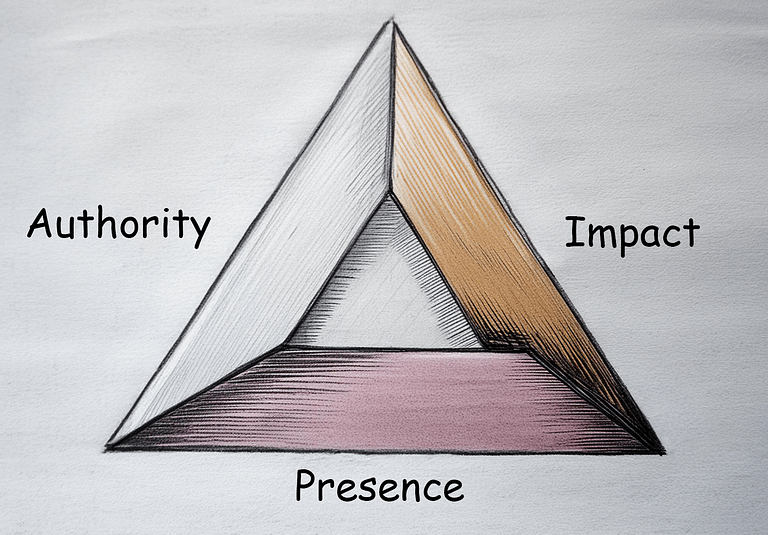
The API model, consisting of Authority, Presence, and Impact, is a framework used in personal development and leadership coaching to enhance one’s effectiveness and influence in various areas of life.
"Authority is what happens before you enter the room, presence is how you work the room, impact is what is left once you leave the room"
Claudia Cimenti
About the A.P.I. model
Let’s elaborate on each A, P and I component:
Authority – Before You Enter the Room
Before you even step into a room or engage in an interaction, your authority precedes you. Authority is built on a foundation of expertise, knowledge, experience, and reputation. It’s about establishing credibility and trust with others based on your track record, qualifications, and achievements. When you have authority, people are more inclined to listen to what you have to say and respect your opinions and decisions.
Presence – How You Work the Room
Once you’re in the room, your presence becomes evident through your demeanor, behavior, and energy. Presence is about how you carry yourself, interact with others, and command attention. It’s about projecting confidence, charisma, and authenticity in your communication and actions. A strong presence captivates and engages others, making them feel seen, heard, and valued.
Impact – What is Left Once You Leave the Room
After you’ve left the room, your impact lingers in the form of the impression you’ve made and the results you’ve achieved. Impact is about the lasting influence you have on others and the tangible outcomes you’ve produced. It’s about the legacy you leave behind and the ripple effects of your actions. A meaningful impact inspires others, drives positive change, and leaves a lasting mark on individuals, teams and organizations.
By understanding and embodying the principles of authority, presence, and impact, individuals can enhance their effectiveness, influence, and leadership capabilities. Whether in personal interactions, professional settings, or leadership roles, using the API model to be mindful of the various aspects of our interactions empowers individuals to make a positive difference and leave a lasting legacy.
In leadership, the API model can be applied to develop well-rounded leaders who are knowledgeable, confident, and capable of making a positive impact on their teams and organizations. By focusing on separately building authority, cultivating presence, and maximizing impact, leaders can enhance their leadership effectiveness, inspire others, and drive meaningful change.
A couple of illustrative vignettes
Here are a couple vignettes illustrating how leaders can utilize the API model (Authority, Presence, Impact) effectively in various contexts to enhance their leadership and influence:
Vignette 1: Corporate Leadership in Crisis Management
Situation: A technology company faces a severe cybersecurity breach.
Authority: Before the crisis team meeting, the CEO’s authority is established through her deep expertise in cybersecurity and her history of successfully navigating previous crises. Her team trusts her judgment and leadership because of her proven track record.
Presence: During the crisis meetings, the CEO exhibits calmness and confidence. She clearly communicates the action plan, delegates responsibilities effectively, and listens attentively to her team’s input. Her demeanor reassures the team, keeping everyone focused and motivated despite the high-stress situation.
Impact: After the crisis is resolved, the CEO’s impact is evident. The company not only recovers but also implements new, stronger security measures that set a new industry standard. Her leadership during the crisis leads to enhanced trust and loyalty from customers and employees, strengthening the company’s reputation.
Vignette 2: Educational Leadership and Institutional Change
Situation: A university dean seeks to overhaul the outdated curriculum to better prepare students for the changing job market.
Authority: The dean’s authority is recognized due to her extensive background in educational innovation and academic excellence. Before proposing changes, she compiles evidence-based research and successful case studies to support her vision, which builds her credibility.
Presence: At faculty meetings, the dean’s presence is marked by her ability to articulate a clear vision and inspire her colleagues. She engages in meaningful dialogues, addresses concerns empathetically, and aligns the faculty with her forward-thinking goals through persuasive communication.
Impact: Once the curriculum changes are implemented, the dean’s impact becomes apparent. Graduation rates improve, student job placement rates rise, and the university gains recognition for its innovative programs. Her efforts leave a lasting mark on the institution and its students.
Vignette 3: Nonprofit Leadership and Community Engagement
Situation: The executive director of a nonprofit organization aims to address homelessness in a major city.
Authority: Her authority is established long before she interacts with stakeholders, rooted in her extensive experience with social issues and her educational background in public policy. Her authority is also reflected in her ability to secure partnerships and funding based on her organization’s past successes.
Presence: During community forums and stakeholder meetings, she demonstrates her presence through strong, compassionate leadership. She effectively communicates the urgency of the issue, fosters collaboration among diverse groups, and drives consensus.
Impact: After implementing a comprehensive community-based program, her impact is felt through decreased homelessness rates and improved community services. The initiatives she spearheaded continue to influence city policies and practices long after she has moved on to other projects.
These vignettes showcase how leaders can leverage their authority, presence, and impact to drive positive outcomes and lasting changes in various settings. The API model not only enhances personal leadership capabilities but also promotes a broader positive influence on teams, organizations, and communities.
Working with a coach
If you’re a leader and these ideas strike a chord with you, consider the transformative potential of working with a coach. A coach can provide a structured yet supportive space where you can sharpen your clarity and focus, building a stronger foundation for your authority and reputation. Whether it’s honing your expertise, enhancing your visibility, or navigating complex organizational politics, a coach can guide you through these pivotal aspects of leadership.
Moreover, refining your presence and charisma is another area where a coach can be incredibly beneficial. Through personalized feedback and targeted exercises, you can develop more effective communication skills, greater emotional intelligence, and a more engaging persona. This is especially crucial in environments where your ability to inspire and motivate your team can make a real difference.
Lastly, a coach can help you outline and implement strategies to maximize your impact. This means not just achieving goals, but setting in motion changes that lead to significant and measurable results. Whether you’re looking to foster innovation, drive organizational change, or leave a lasting legacy, a coach can help you map out the steps to get there, aligning your efforts with broader organizational objectives. In essence, a leadership coach isn’t just an advisor—they’re an essential partner in your journey to deepen your influence and extend your impact in meaningful, lasting ways.
I’d love to have the opportunity of being your coach.
Please reach out today to schedule a complimentary exploration meeting!